Fast, reliable, and accessible diagnostic testing is becoming increasingly essential – whether for managing chronic conditions or detecting acute infections. Within the SusFE project, the point‑of‑care (PoC) use case set out to develop an eco‑friendly, low‑cost, disposable microfluidic PoC device capable of detecting inflammation and cardiac biomarkers such as CRP and Troponin I by using electrochemical (EC) sensing techniques.
The clear aim was to create a device that brings rapid testing closer to patients while embodying the principles of sustainability‑by‑design and by using as sustainable materials as possible. This aligns directly with SusFE’s broader objectives of delivering next‑generation, low‑carbon functional electronics compatible with roll‑to‑roll (R2R) manufacturing.
Progress achieved through the SusFE project
1. Roll‑to‑roll manufacturing of sensors and microfluidics
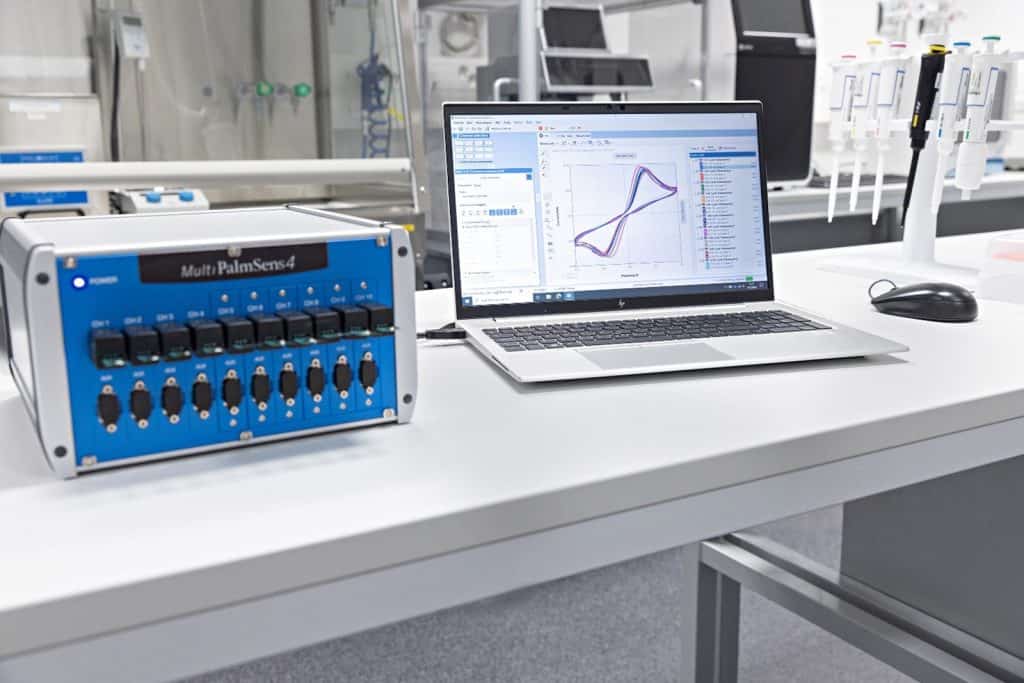
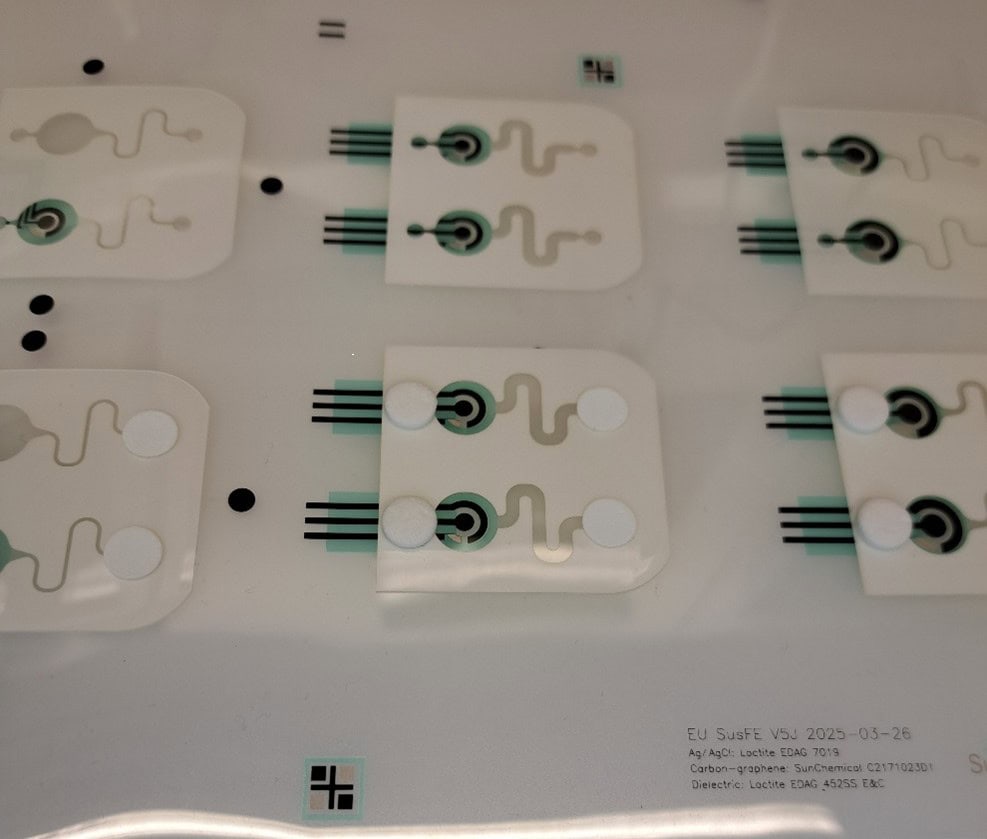
A major milestone was the successful roll-to-roll (R2R) fabrication of sustainable electrochemical sensors using materials such as polylactic acid (PLA) and cellulose acetate (CA) (Fig. 1). The sensor elements were printed on PLA using mostly carbon graphene ink and minimizing the use of silver-based ink. These printed sensors demonstrated high repeatability in cyclic voltammetry (CV) (Fig. 2) and differential pulse voltammetry (DPV), forming a strong foundation for biochemical functionalization.
The microfluidic part of the device, intended for the sample application onto the EC sensors, was manufactured by laser cutting using double sided adhesive and CA as materials (Fig. 3) Both sheet‑level and R2R manufacturing approaches were explored during the project, validating scalable fabrication suitable for mass production.
2. Integration Toward a Functional PoC System
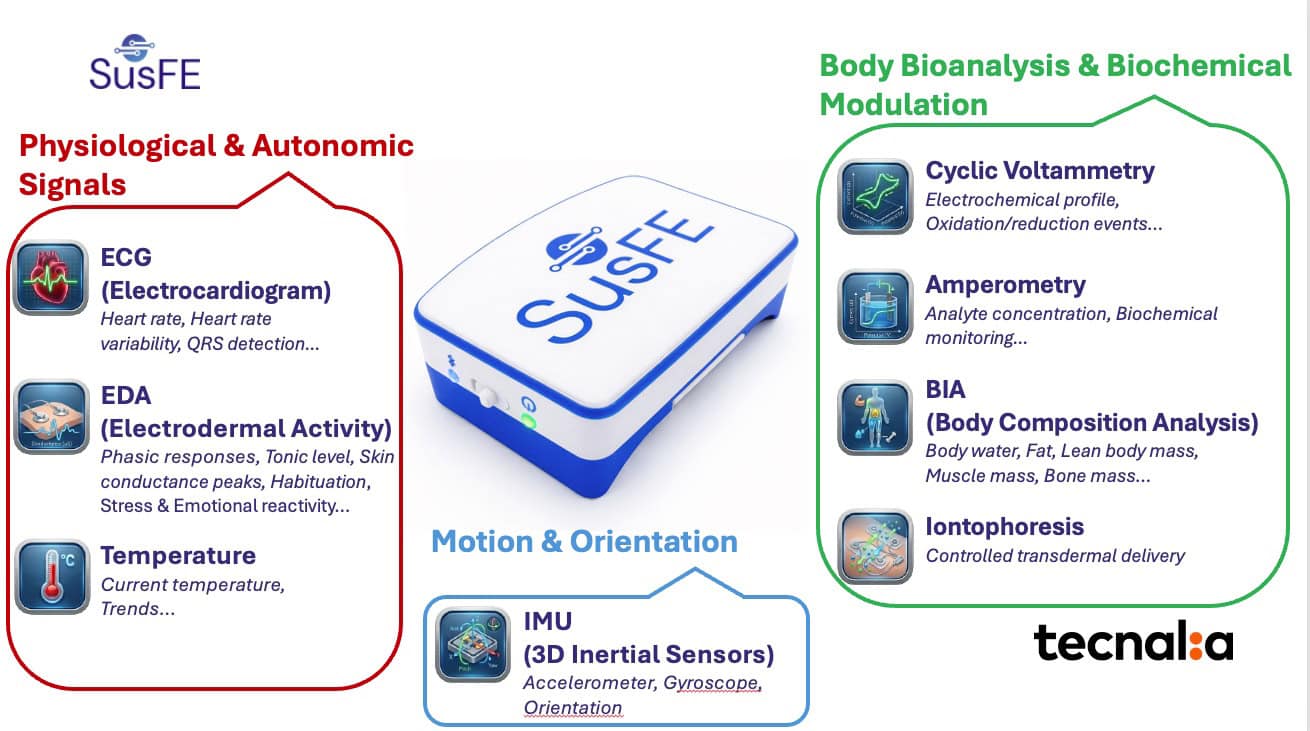
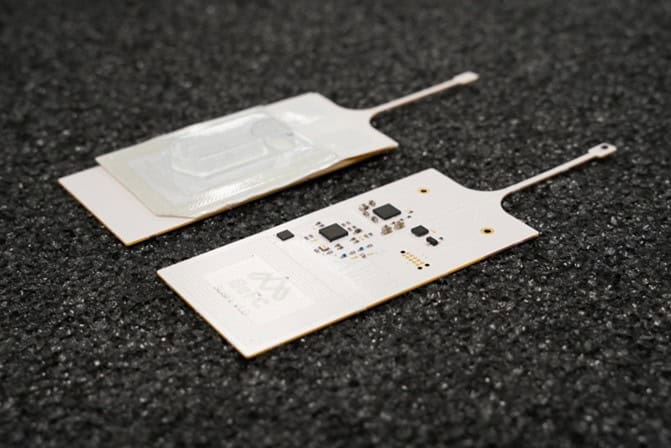
A significant achievement was the development of a compact integrated chip (IC) based handheld electrochemical (EC) sensor readerutilizing differential pulse voltammetry (DPV). This EC reader delivered performance comparable to benchtop instruments while supporting the long‑term sustainability vision by keeping electronics reusable and sensors disposable.
3. Biomolecular Sensing
During the SusFE project several immobilization strategies to functionalize the printed EC sensors with antibodies and aptamers, enabling the detection of CRP and Troponin I, were investigated. Aptamer‑based Troponin I detection showed the most promising results, with concentration‑dependent DPV signals, especially with cold atmospheric plasma treatment for surface structuring.
Sustainability aspects
Sustainability was embedded into every stage of the PoC device’s development. These decisions collectively support a device that is not only functional, but more sustainable than traditional alternatives. Moreover, these features align with emerging EU sustainability regulations and strengthen the solution’s market relevance.
- Use of eco‑friendly materials: PLA and CA were chosen for being bio‑based and biodegradable, significantly reducing environmental footprint.
- Low‑energy, low‑waste manufacturing: R2R processes operated at low curing temperatures and used UV‑curable inks, minimizing energy consumption and reducing use of volatile organic compounds (VOCs).
- Design for Manufacturing and Assembly (DfMA): Focus was placed on reducing materials, using standardized components, minimizing adhesives, and designing for easier recycling.
- Reduced use of critical raw materials (CRMs):Carbon‑graphene ink was mostly used as conductive material and the use of silver was minimized.
Conclusion
The PoC use case within the SusFE project has demonstrated that sustainability and high‑performance diagnostics can go hand‑in‑hand. From R2R‑printed eco‑friendly sensors to developing a compact DPV reader and advancing aptamer‑based detection, the progress achieved forms a robust platform for future innovation. With continued refinement and integration efforts, this work has strong potential to influence the next generation of accessible, sustainable healthcare diagnostics.