Building on the momentum of our series, we’re highlighting another early-career voice from the SusFE community. In this third installment, we spoke with Peng Zhang from the company Capitainer (Sweden), an early-career researcher working on the EC-funded SusFE project, who shares how interdisciplinary collaboration can turn individual expertise into “1+1>2” innovation—from integrated microfluidics with sensors and bio-fuel cells to sustainability and recycling. His reflections reveal a shift from focusing solely on technical details to thinking end-to-end about impact, while building essential skills in communication and documentation. Peng’s journey highlights both the challenges and the unexpected sparks that arise when diverse teams work toward advancing healthcare technology.
- What did you initially expect from participating in an EC-funded project?
I expected to connect and communicate with experts in related fields to expand my understanding of the industry and opportunities for future collaborations on more interesting projects.
- How did your real-world experience match or diverge from those expectations?
It was beyond my expectations. I got to communicate and learn from partners working on multiple niches in the industry and gained a lot of insights and inspiration that I might never get otherwise.
- Which project elements most shaped your view of EC funding?
The interdisciplinary collaborations. It is such an amazing experience to bring people with different expertise together to work on the same goal. Each contributes from a different perspective but by sharing and teamworking we can achieve 1+1>2 effect.
- How has working with international or multidisciplinary partners influenced your day-to-day approach?
It helped me to think further and broader in my routine work. I used to focus way more on the technical details, but via the project working, I learned to think also about how my work might affect other steps and people down the streamline of the product from the lab to the market and vice versa.
- What new technical or soft skills have you acquired through this project?
I have learned more about integrated microfluidics and sustainable energy. By working together, I have also improved my soft skills like documenting and presenting my work, as well as communicating with experts with different backgrounds.
- Which training, workshops or mobility opportunities added the most value to your professional development?
This is my first EC-funded project, and I have not joined many trainings and workshops but I am looking forward to to so in the future. I have joined some very interesting webinars though, for example, one on sustainability and recycling. I learned a lot about recycling technologies, as well as the challenges both technically and economically. I’m proud that we have sustainability as an important aspect of the SusFE project.
- Can you point to specific achievements that you attribute to your EC-project work?
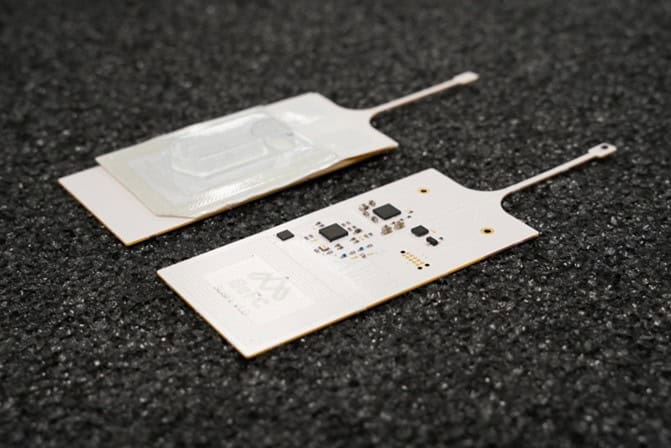
The development of adapted microfluidic devices to integrate with sensors and bio-fuel cells, which brought up countless new ideas for novel microsampling- and point-of-care devices.
- What unexpected benefits or surprises did you encounter along the way?
It is golden to have people from different fields, with different skills and experience. Unexpected ideas and solutions that no one could come up with alone, just pop up during the collision of thoughts. I really enjoyed that.
- What were the biggest challenges you faced, and how did you tackle them?
Even as I said it was fun, it was also a bit challenging to collaborate smoothly with experts working on things that you had little knowledge of. I tackled it by listening carefully, doing research and asking questions. Once I understood more, I started to see more and more clearly how we can collaborate in the project.
- What single piece of advice would you give to future early-stage researchers or managers?
Don’t be afraid. Dare to try, dare to share. Even failed experiments can bring knowledge and experiences, and even bad results are worth sharing and discussing, which can bring different insights and new ideas.
Peng’s story underscores how interdisciplinary collaboration, clear communication, and careful documentation can turn complex engineering into real-world impact. His advice to peers—think in systems, not silos; stay curious across disciplines; and build bridges between academia and industry with sustainability in mind—offers practical guidance for anyone joining EC-funded projects. As SusFE moves forward, Peng’s journey reminds us that cross-border teamwork can amplify individual contributions into lasting innovation in healthcare technology. Thank you, Peng, for sharing your experience and inspiring the next generation of early-career professionals.