1. What did you initially expect from participating in an EC-funded project?
I expected to gain new scientific knowledge and methodological skills that would strengthen and shape my research experience. I also expected that the project would allow me to connect with researchers from different institutions and disciplines and participate in international conferences and meetings that would expand my professional network.
2. How did your real-world experience match or diverge from those expectations?
My experience was primarily centered on technical and methodological work rather than extensive cross-institutional collaboration. However, this allowed me to deepen my expertise and focus on developing robust analytical approaches.
3. Which project elements most shaped your view of EC funding?
Since my research experience has primarily been within EC-funded projects, these projects have defined my perception of how large-scale collaborative research operates. The clearly defined objectives, timelines, and deliverables highlighted the importance of organization and measurable outcomes. This framework influenced how I now approach planning and documenting my own research activities.
4. How has working with international or multidisciplinary partners influenced your day-to-day approach?
Although my day-to-day work was primarily within my local team, the broader international and multidisciplinary framework of the project still influenced my approach. Working within a structured European collaboration required clear reporting, alignment with shared objectives, and awareness of how my technical contributions fit into a larger research context.
5. What new technical or soft skills have you acquired through this project?
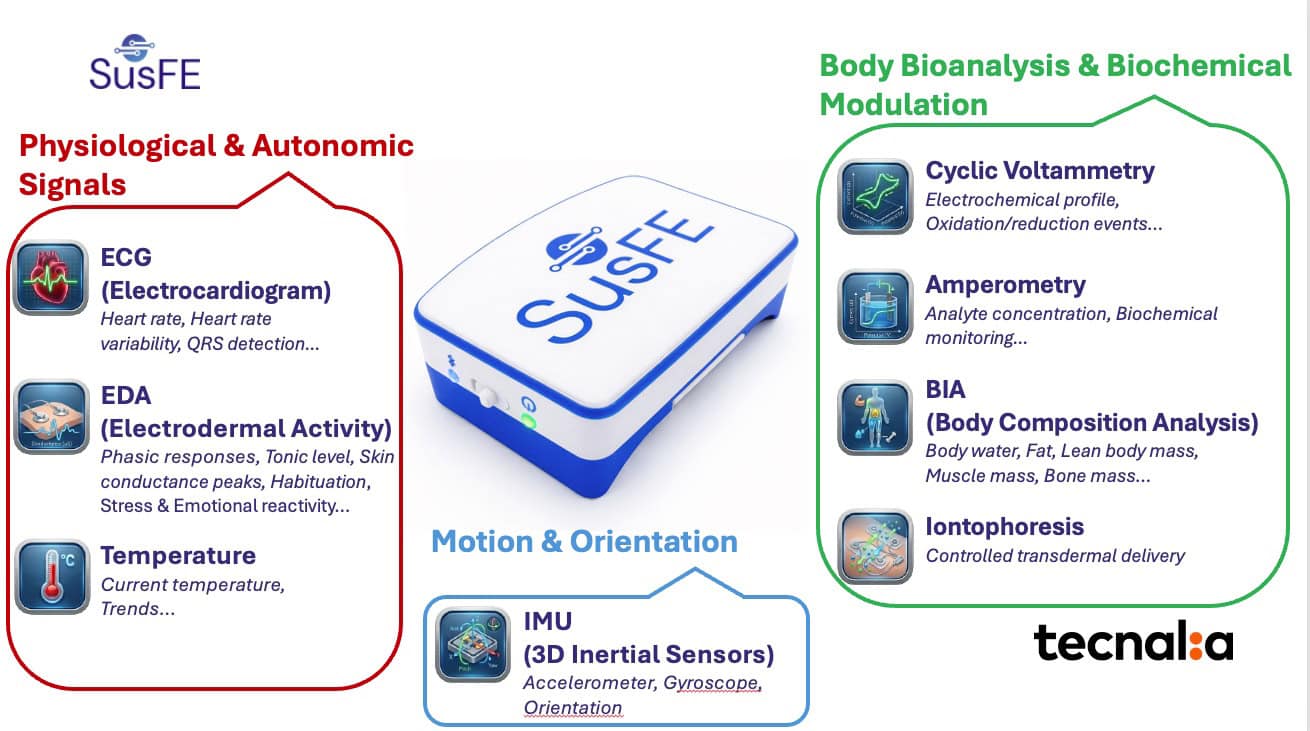
Technically, I strengthened my expertise in multimodal physiological signal analysis, wearable systems, and AI-based stress classification.
On the soft skills side, I improved my scientific communication skills through reporting and presenting results within the project framework. I also developed a more structured and systematic approach to organizing research activities and managing project-related tasks.
6. Which training, workshops or mobility opportunities added the most value to your professional development?
The most valuable activities were the project-related conferences. Presenting results and discussing progress within the broader project context strengthened my confidence in communicating technical work.
7. Can you point out specific achievements that you attribute to your EC project work?
One of the key achievements of my work within the EC project was the development of a multimodal physiological monitoring framework for stress assessment. I focused particularly on signal processing and the implementation of AI-based stress classification algorithms.
A significant part of my contribution involved investigating the feasibility of acquiring reliable physiological signals, especially EDA/GSR, from non-traditional measurement sites such as the upper arm. This required systematic parameter optimization, electrode handling protocols, and validation procedures to ensure signal quality, including stabilization requirements prior to measurement.
The project resulted in conference publications and the collection of experimental data that are currently being prepared for further scientific dissemination.
8. What unexpected benefits or surprises did you encounter along the way?
One unexpected benefit was gaining a much deeper understanding of the complexity behind reliable physiological signal acquisition. While stress classification is often discussed at the algorithmic level, I realized how critical experimental design, electrode placement, and signal stabilization are for obtaining valid data. This experience strengthened my appreciation for methodological rigor.
9. What were the biggest challenges you faced, and how did you tackle them?
One of the main challenges was ensuring reliable physiological signal acquisition under non-ideal conditions. For example, extracting accurate heart rate values from ECG signals recorded during movement required careful signal quality assessment. I had to define and validate appropriate quality metrics to detect noisy segments. When poor ECG quality was detected, heart rate estimation was intentionally suspended until valid signal conditions were restored.
Similarly, obtaining reliable EDA/GSR signals from unconventional measurement sites required systematic parameter tuning and protocol refinement. I addressed these challenges through iterative experimentation, literature review, and rigorous validation procedures, ultimately improving the robustness and reliability of the monitoring framework.
10. What single piece of advice would you give to future early-stage researchers or managers?
My advice would be to prioritize methodological rigor over quick results. In complex projects, especially those involving physiological data and AI, the quality of experimental design and signal validation is far more important than rapid model development. Equally important is systematic and detailed documentation from the very beginning. Investing time in clearly defining how data, protocols, and decisions will be recorded and organized significantly improves reproducibility and long-term project sustainability.