Analyzing biomarkers and compounds in blood is fundamental in clinical diagnostics and drug development and each year billions of bloods samples are taken in health care and the pharmaceutical industry for this purpose. All these tests call for patients to travel to a health care facility for blood drawing by a trained nurse and cooled transportation of samples to a laboratory for analysis. In microsampling, patients take a blood sample by themselves in their homes and send it with regular postal mail to the laboratory for analysis. Bringing improved comfort for patients, potential cost savings and removing geographical barriers, microsampling plays an important role in the development of modern health care solutions such as telemedicine, digital health and Decentralized Clinical Trials (DCT) in the pharmaceutical industry.
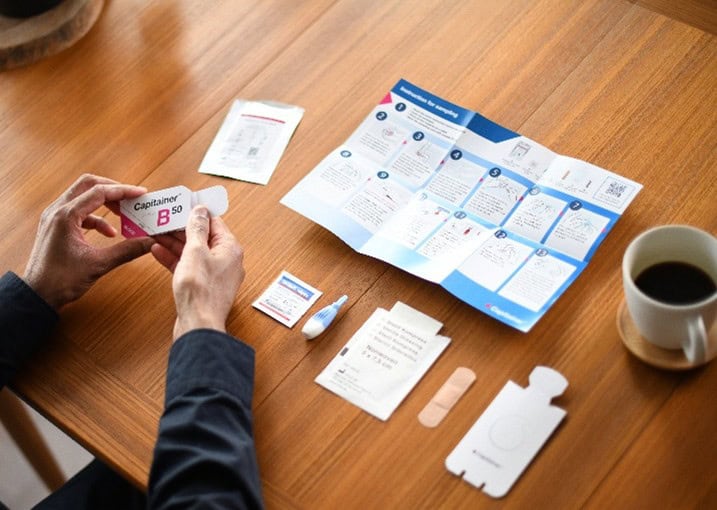
Moving from venipuncture sampling by a trained medical professional to sampling by the patient themselves requires that the patient provides information about the sampling event according to a defined protocol. Besides registration of patient ID, drug development studies in the pharma industry and Therapeutic Drug Monitoring (TDM) in health care, depend on registration of time of multiple blood sample collections at specific time points to study drug-dose effects which can be challenging for the patient. Even in venipuncture sampling by a trained medical professional, heterogenous and inconsistent sampling time documentation due to a variety of reasons have been reported throughout European laboratories and lack of or wrongly recorded sampling time is a source of data loss in clinical trials [1], [2]. To facilitate reliable time collection when using microsampling, the SusFE project is developing a plasma sampling device with integrated time stamp functionality to capture time of sampling automatically. The device consists of a microfluidic system, Capitainer®SEP10, developed and commercialized by Capitainer AB, Sweden, that extracts and meters a plasma like fluid from finger prick blood with a volumetric precision < 3 % and stores it in dried format. When blood is applied to the system, electronics integrated in the product activate a time clock. Upon arrival at the laboratory, the time of blood application can wirelessly be read out into the laboratory management system as part of the sample analysis. The electronic functionalities in the device are powered by a bioenzymatic fuel cell developed and commercialized by BeFC® SAS, France. The fact that all functional steps such as plasma extraction, metering into a defined plasma volume and registration of time, are executed passively without relying on the user to perform certain steps, promotes robust sample- and time collection which reduces the risk of data loss.
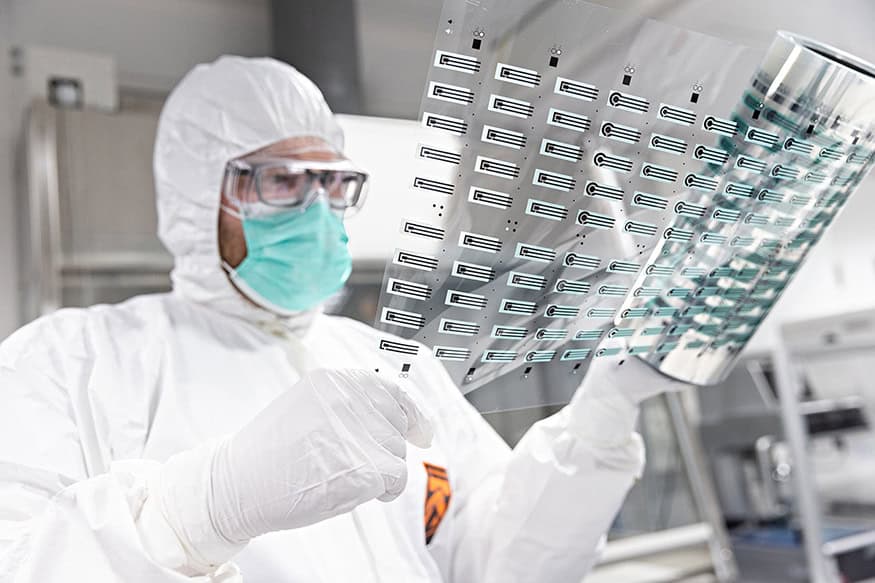
The construction of the device is based on lamination of paper and polymer foils enabling compatibility with high-volume manufacturing processes by roll-to-roll (R2R) which promotes that the resulting product can be produced at large scale and a lower unit cost. Three years into the project, after market analysis, user specifications and component design, the sub-components of the system has proven manufacturable at scale; all microfluidic layers of the plasma sampling device have been cut and assembled into a functioning plasma sampling device at the R2R manufacturing pilot line of VTT, Finland, carbon printed electrodes have been printed on foil and integrated into the microfluidics in R2R showing a measurable response upon exposure to plasma in the system, an enzymatic biofuel cell and circuit have been designed and tested being able to provide power for the required electronic circuitry for 4 days. In the coming month, all components will be assembled and tested together as one functioning prototype. The goal for the partners after the project is to take the technology to the next maturity level towards commercialization, and for this, partners are looking for further funding.
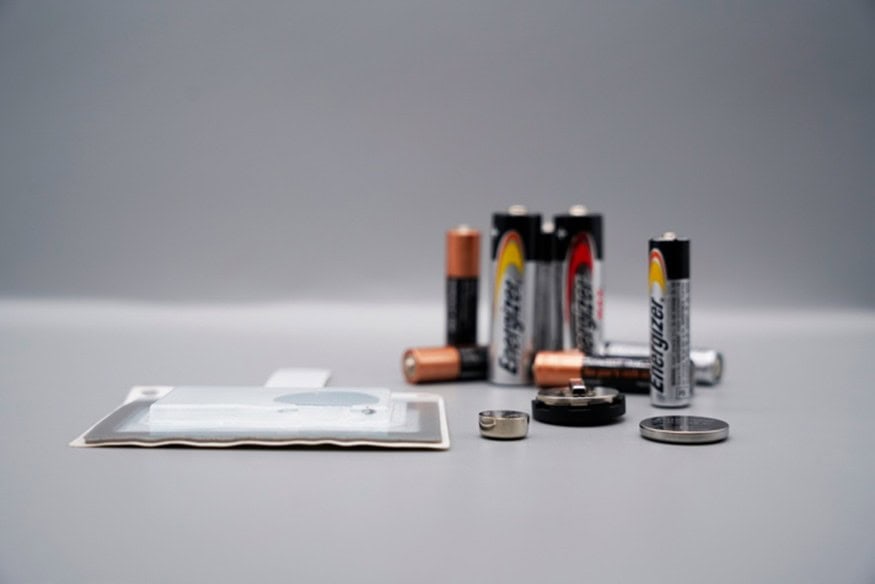
A strong focus of the SusFE project is to develop and use environmentally sustainable components and processes. Currently, a Life Cycle Analysis (LCA) is being made of the developed system as part of the project. Independently of the results of the LCA, the construction of the time stamp sampling card is taking several steps forward in terms of sustainability compared to state-of-the-art technologies. The fuel cell is 50% compostable after 45 days in industrial compost and results in at least 100 times less CO2 emission than a conventional button battery. The use of carbon electrodes in microfluidics is a more sustainable option than conventional gold electrodes due to gold’s scarcity and the high environmental impact of its mining and processing. The footprint of the microfluidics has been minimized to reduce plastic content and for increased production yield. Further, for efficient waste management, the component assembly has been designed for separability of plastic and paper.
Finally, compared to the standard way of blood collection, venipuncture sampling, microsampling reduces the amount of travel and transport. As an example, a publication by Johnsons & Johnson shows that the average CO2 emission from their clinical trials is 3260 kg per patient and trial [3]. Five major contributors are identified, accounting for 85% of the total CO2 emission. Of these five, the major one regards drug production and packaging (50%) while the remaining four are travel and transports of patients, staff and samples (35%). In comparison, when microsampling is used, the only transport needed is sending a sampling kit to the patient, which averages 100 g CO2 per parcel, and returning the sampling card to the lab for analysis, which averages 20 g CO2 per envelope [4], [5]. Assuming that a clinical trial can require between 1 to 10 blood samples and most of them require time registration, it can be concluded that the sampling card with integrated time stamp can reduce the CO2 emission related to transports in clinical trials by 1000-folds. It is reasonable to expect a similar outcome when used in therapeutic drug monitoring in health care.
This pioneering use case marks a significant step towards more sustainable and patient-centered clinical practices. Through advanced technology, eco-friendly design, and decentralized sampling, SusFe is reducing environmental impact while improving healthcare accessibility. Stay tuned for our next post, where we’ll explore further use cases that continue to push the boundaries of sustainable innovation in medical research.
[1] L. Choi et al. Eur J Clin Pharmacol 69, 2055–2064 (2013). https://doi.org/10.1007/s00228-013-1576-7.
[2] T. M. Shiovitz et al Clin Pharm. Volume56, Issue9, September 2016, Pages 1151-1164, https://doi.org/10.1002/jcph.689.
[3] JK La Roche BMJ Open 2025;15:e085364. doi: 10.1136/bmjopen-2024-085364
[4] CO2 emissions per parcel down 56% over last five years – Supply Chain Movement